Take a look
The jukebox, live.
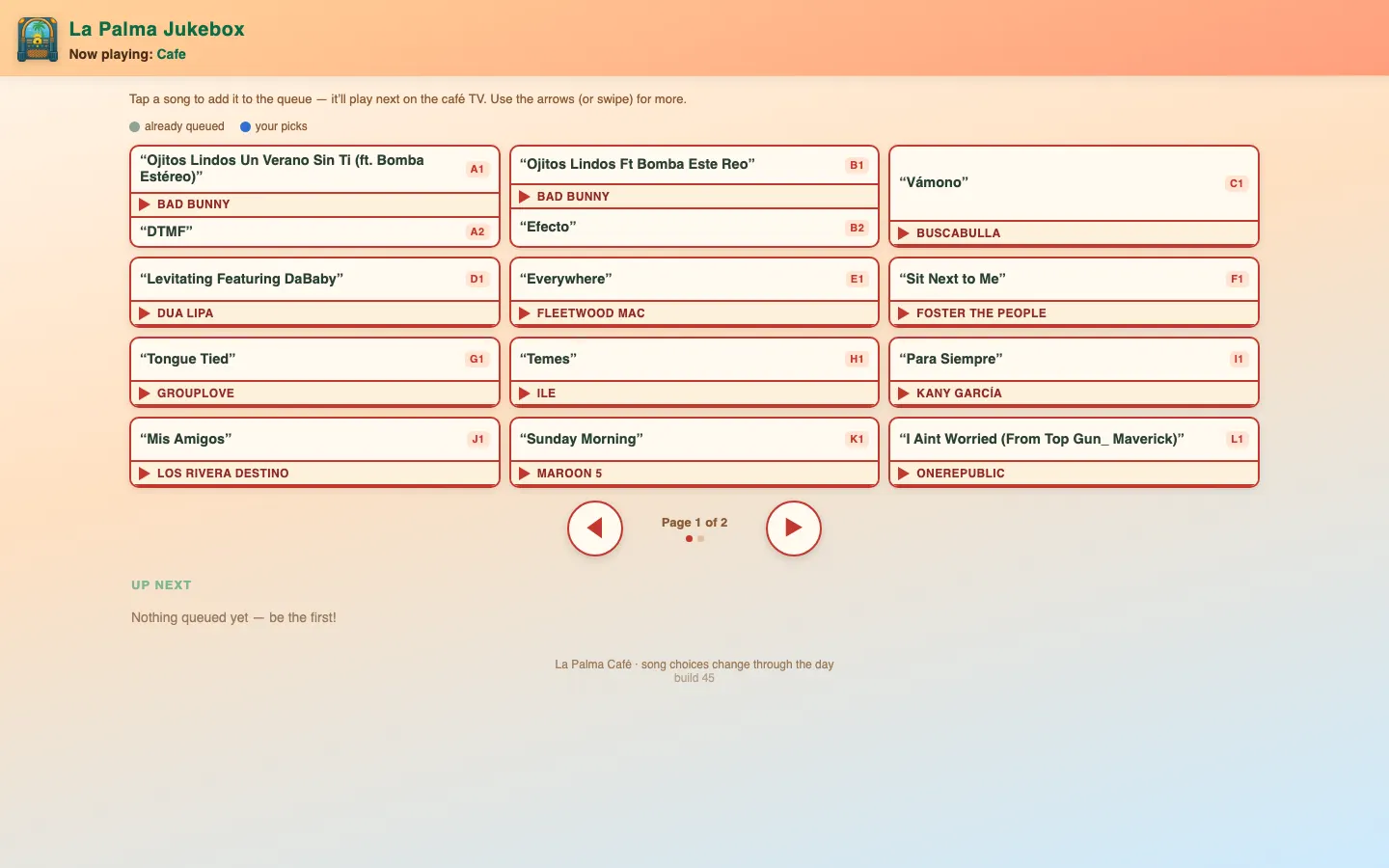
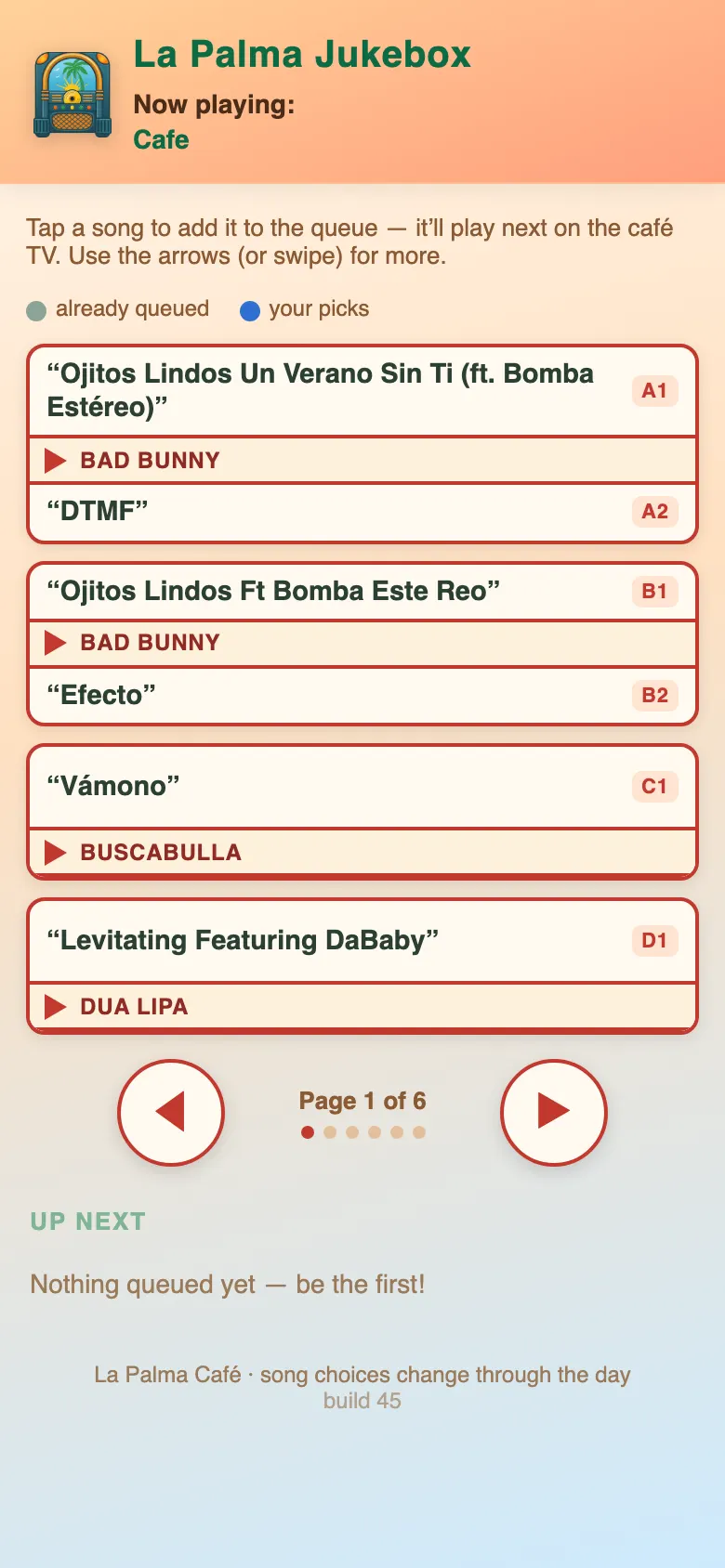
This is the page guests open when they scan the QR code at the café. Song choices change through the day.
The whole café runs on it: the register at the counter, the menu boards on the TVs, and a jukebox guests run from their phones.
A small café needs to take money, show the menu and set the mood. These usually come from three vendors with three logins. At La Palma, they're one system that we built and maintain.
A touch-friendly point of sale at the counter. It takes ATH Móvil, applies the resident discount for locals, and tracks inventory.
The TVs on the wall show the menu, promos and music, and change their look with the time of day.
Guests scan a QR code, pick a song, and it plays next on the café TV.
Locals get their discount at the register automatically. It's part of the system, not something staff have to remember.
Morning, lunch, chill and closed each get their own backgrounds and playlist, and the TVs switch between them on their own.
Prices, promos and songs are changed in one dashboard. The TVs pick up the changes without anyone touching them.
On the jukebox, your songs show in blue and other guests' in green. The one playing now flashes.
The jukebox only takes requests while La Palma shows as open on Abierto, so the hours are kept in one place.
If the network drops, the jukebox just steps aside and the café's regular playlist keeps going.
This is the page guests open when they scan the QR code at the café. Song choices change through the day.
La Palma is a café and bar on Vieques. It needed a register that takes ATH Móvil and knows who's a local, screens that look like the café rather than a cable box, and music that guests could join in on.
So the register, the TVs and the jukebox were built as one system, and they keep improving with the people who use them every day. It shows that a small island business can run on software made down the street.
At La Palma? Scan the QR code on the table, or open the jukebox here.